Purpose
To provide practical, classroom-ready tools that support collaborative learning and shared instructional responsibility in inclusive classrooms.
A. What is Peer-Mediation?
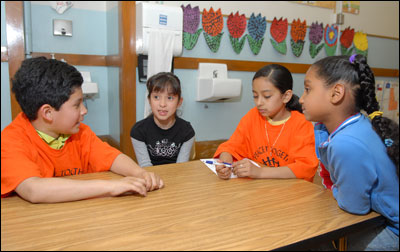
Peer-mediation is a strategy where students support each other’s learning through structured interaction. It is particularly helpful in inclusive classrooms, as it promotes:
- social connection
- communication skills
- active participation
- peer support for diverse learners
Rather than relying only on teacher-led instruction, peer-mediation encourages students to learn with and from each other.
B. Peer-Mediation Checklist
This checklist can be used while planning or observing classroom activities.
Before the Activity
- Clear instructions are provided to all students
- Roles are defined (e.g., speaker, listener, helper)
- Expectations for respectful interaction are explained
- Materials are accessible to all students
During the Activity
- Students are working in pairs or small groups
- Peer interactions are respectful and supportive
- Students are given time to think and respond
- Teacher circulates and provides guidance when needed
After the Activity
- Students reflect on their experience
- Teacher observes participation levels
- Adjustments are noted for future activities
Examples of Peer-Mediation Strategies
- Think–Pair–Share
- Peer explanation of concepts
- Partner reading or discussion
- Small group problem-solving
C. What is Co-Teaching?
Co-teaching involves two educators working together to plan, deliver, and assess instruction for the same group of students.
This may include:
- classroom teacher + support teacher
- classroom teacher + resource teacher
- classroom teacher + educational assistant
- classroom teacher+ special educator
Co-teaching supports inclusive education by providing:
- multiple perspectives
- flexible instruction
- increased student support
D. Co-Teaching Models (Simple Overview)
1. One Teach, One Support
One teacher leads, the other provides individual support.
2. Station Teaching
Students rotate between learning stations led by teachers.
3. Parallel Teaching
Class is divided into two groups, both teachers teach the same content.
4. Team Teaching
Both teachers share instruction equally.
E. Co-Teaching Planning Checklist
Before the Lesson
- Learning goals are clearly defined
- Roles and responsibilities are agreed upon
- Instructional strategies are planned together
- Materials are prepared collaboratively
During the Lesson
- Both teachers are actively engaged
- Students have access to support when needed
- Instruction is flexible and responsive
- Transitions are smooth and well-managed
After the Lesson
- Teachers reflect together on what worked
- Student engagement and participation are discussed
- Adjustments are planned for future lessons
F. Reflection Questions
For Peer-Mediation
- Did all students participate meaningfully?
- Were interactions supportive and respectful?
- Did peer support improve understanding?
For Co-Teaching
- Was the lesson balanced between both teachers?
- Did the approach support diverse learners?
- What could be improved in future collaboration?
G. Practical Tips for Teachers
- Start small: use one peer strategy or co-teaching model
- Be flexible and adjust based on student needs
- Focus on participation, not perfection
- Build strong communication between teachers and students
Final Note
Inclusive classrooms are strengthened through collaboration. When students learn from each other, and teachers work together, classrooms become more supportive, flexible, and responsive to diverse learning needs. It also reduces burnout.